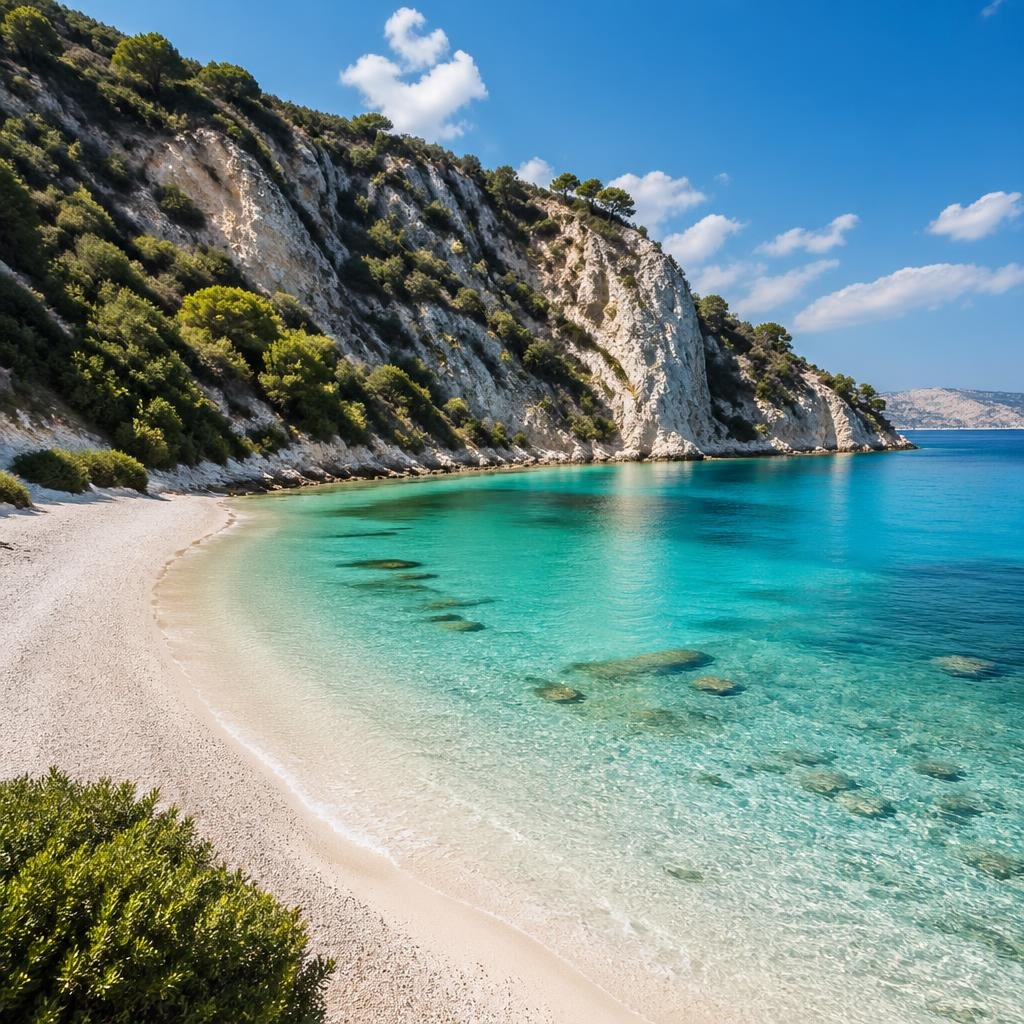


Buy a house in G R E E C E

Once you have found a property you wish to purchase the process required through to completion is approximately 6 to 12 weeks. Greek property is available to all EU and non-EU citizens.
Property in Greece is at present relatively undervalued, there is excellent potential for capital growth. Some areas of the mainland are seeing appreciation of up to 25 per cent per annum. Properties in Greece are freehold and they are all registered with the national Land Registry and/or the national Registry of Mortgages. Property in Greece is under the protection of the State (Greek Constitution: Article 17, paragraph 1); all property owners in the country have equal rights and responsibilities. All buildings in Greece are designed in accordance with Greek and European Building Codes and are constructed to European building standards. Buildings are compliant with the design Eurocodes and the European building regulations.
Step by Step Buying Guide
Once you have found the property of your liking, and you decide to proceed with a purchase, you will then need to follow these basic steps:
1. Appoint a Lawyer
The Buyer must appoint a lawyer to assist him with and represent him in the process. We can either provide you with a list of reputable real estate lawyers all over GREECE or immediately assign one for you, subject to your approval.
The lawyer’s fee is 0.4% to 1% of the property value, plus 24% VAT, plus any expenses for legal research or any other legal services offered to the client.
2. Appoint a Public Notary
A public notary must be appointed since any property purchase agreement, in order to be valid, must be written by a public notary and signed in his presence.
The notary public’s fee is 1.0% on a property value of up to € 120.000 and 0.70% on any value above that, plus a fixed fee of up to 500 € for the drafting of the contract.
3. Get a copy of the title deed and perform a title search at the Registry of Mortgages.
The buyer must obtain the contract deed (title) held by the seller. It is then the lawyer’s obligation to search the title deed at the registry of mortgages. The search must be carried out in order to secure that:
- The vendor holds the absolute deed of the property.
- The property is unencumbered. All property taxes burdening the seller have been paid.
- The construction was completed in accordance to all planning and building permissions. Thus, only if the title deed is secure should the buyer proceed to contract.
4. Issue a tax registry number
A tax registry number must be issued for the buyer, in order to proceed with any transactions. The tax registry number is applied for and issued by the local tax authority. The lawyer normally does this for you.
5. Pay the transfer and municipality tax
The buyer, prior to signing the contract, must pay the transfer tax to the local tax authority. This is done with the aid of the lawyer. The transfer tax is about 3% on the objective value, but, if the commercial value is higher than the objective value, then the tax authorities could decide to calculate the tax on that value. If planning permission for the building is granted after 31/12/2005, then the transfer tax is replaced by 24% V.A.T. on an assessed and approved by the tax authority value.
6. Signing the contract
In order to have a valid contract, it must be signed in the presence of a public notary and a lawyer. When the contract is signed, the notary registers the transaction at the local registry of mortgages.
7. Effect transfer at the Registry of Mortgages
The buyer’s lawyer makes sure that the title is transferred to the buyer’s name, by obtaining the relevant certificate from the Registry of Mortgages.
The registration fee at the Register of Mortgages is 0,5% on the objective property price.
8. Notify the Land Registry for the transfer
A copy of the title and the certificate from the Registry of Mortgages, of the property needs to be registered under the buyer’s name at the Land registry.
9. Financing your purchase
When deciding how to finance your Greek property purchase, consider all of the following options:
- Paying cash, if you can afford to, is the simplest way.
- Arranging a mortgage on your new property through a lender either in Greece or your country.
Greek banks offer loans to EU citizens for buying, building or renovating property, reaching up to 80% of the commercial value of the property and at interest rates that lie in the range of 3,5% – 5,0%.
for more information our support team can make all these look like a bus door in Athens!
tel : 003 0 210 77 10 150